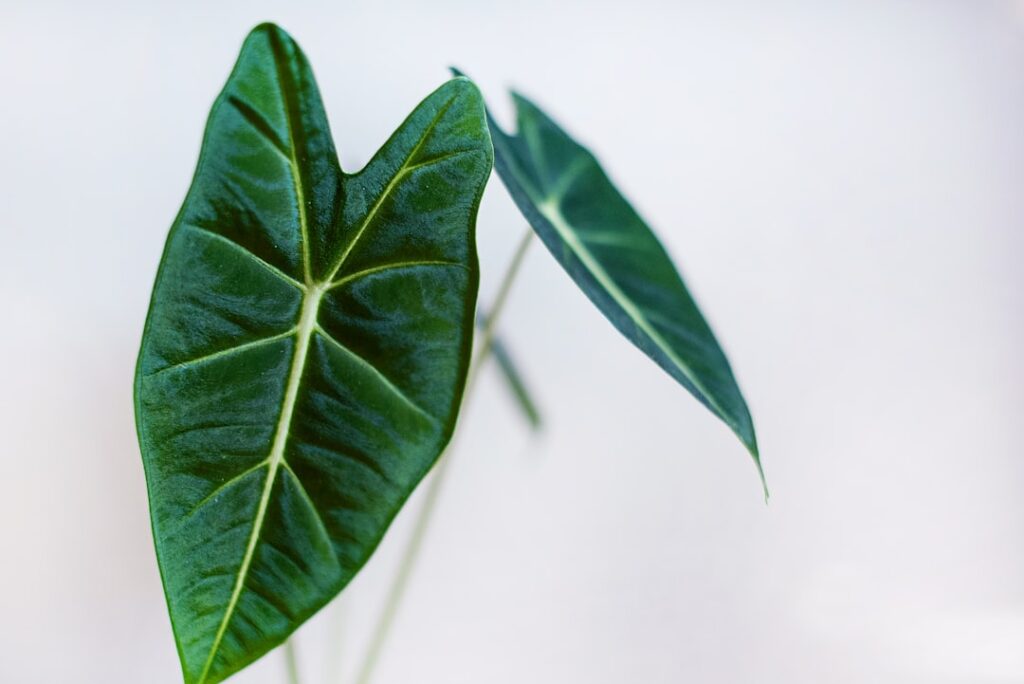
Alocasia macrorrhizos, often referred to as giant taro or elephant ear, is a striking tropical plant known for its impressive foliage and bold presence. Native to Southeast Asia and parts of the Pacific Islands, this plant has made its way into gardens and indoor spaces around the world due to its dramatic appearance and relatively easy care requirements. With enormous, heart-shaped leaves that can reach several feet in length, it serves as a focal point in any botanical setting.
This plant thrives in warm, humid environments and is typically grown outdoors in USDA zones 9 to 11. However, with the proper care and attention, it can also thrive indoors as a houseplant. Alocasia macrorrhizos prefers bright, indirect light when kept inside. Outdoors, it should be planted in a location that receives partial shade, as too much direct sunlight can scorch its leaves. It grows best in rich, well-draining soil that retains moisture without becoming waterlogged, a crucial factor for preventing root rot.
Watering is another important aspect of maintaining a healthy alocasia macrorrhizos. It enjoys consistently moist soil but not soggy conditions. During the growing season, typically spring through early fall, watering should be frequent enough to keep the soil slightly damp. In the cooler, dormant months, the plant requires less water, and overwatering during this time can lead to fungal issues. Providing high humidity mimics the plant’s natural tropical habitat and helps prevent the leaf edges from browning.
One of the most attractive qualities of this plant is its architectural form. The massive leaves are supported by thick, upright stems that can grow several feet tall. This makes the plant ideal for creating a lush, tropical atmosphere in large indoor spaces or shaded garden corners. For those interested in learning more about cultivating alocasia macrorrhizos, there are numerous resources that offer insights into its care and propagation.
Propagation of alocasia macrorrhizos is generally done through division. Each mature plant will eventually produce offsets or “pups” at its base. These can be separated from the main plant and potted individually. It’s best to perform this task during the growing season when the plant is actively developing. Each new division should have a healthy root system and at least one stem to promote successful growth.
Aside from its ornamental value, alocasia macrorrhizos has traditional uses in some cultures. In parts of Asia and the Pacific Islands, the plant has been cultivated for its starchy corms, although they must be properly cooked to remove toxins. It’s important to note that all parts of the plant are toxic when raw, which is why it’s primarily appreciated for its visual appeal in modern horticulture rather than its culinary potential.
Pest management is another consideration when growing this plant. It can be susceptible to spider mites, aphids, and mealybugs, especially when grown indoors. Regularly inspecting the foliage and maintaining proper humidity levels helps prevent infestations. If pests are detected, they can often be managed with insecticidal soap or neem oil. Ensuring the plant is not stressed by improper watering or lighting also reduces its vulnerability to pests and diseases.
For those who have an appreciation for bold, tropical plants, adding alocasia macrorrhizos to your collection can be a rewarding experience. It offers an eye-catching structure and thrives when given the right care. Whether you’re looking to enhance a shaded garden bed or bring a piece of the tropics indoors, this plant is a versatile choice. For further guidance on selecting tropical plants and caring for them, you can explore more at tropical gardening tips.