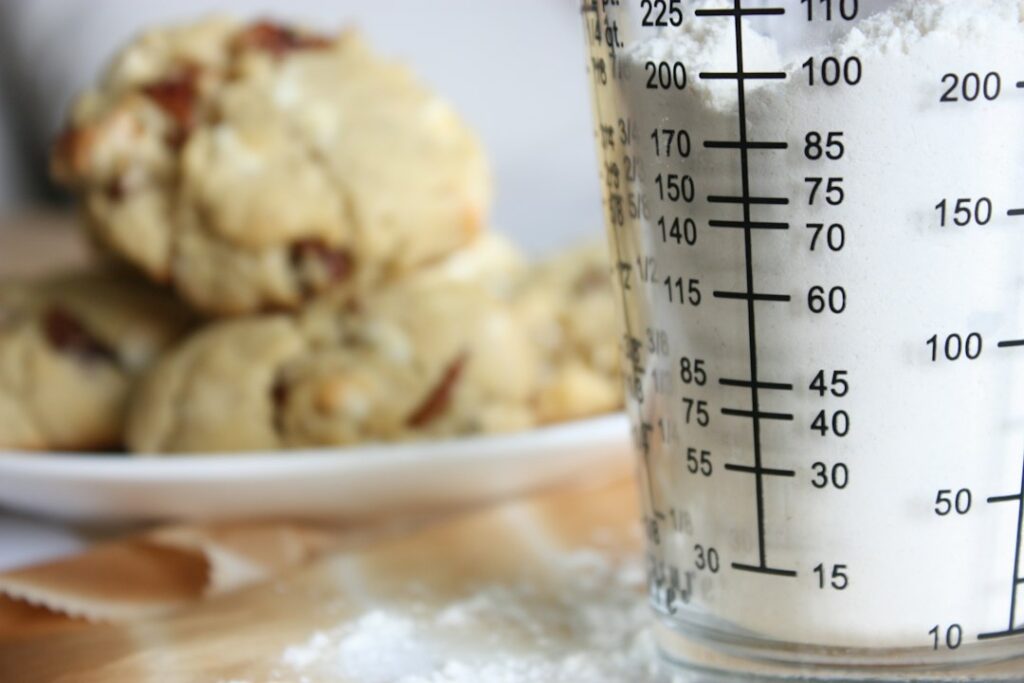

A measuring cup records volume, not mass. Volume describes the space an ingredient occupies; mass describes how much material is present. Aerated flour and settled flour can fill the same cup while weighing differently. Brown sugar presents a different situation because a recipe may call for it to be firmly packed. Workers should follow the method stated in the formula instead of applying one technique to every powder or granular ingredient. If the formula depends on a precise mass, a scale is generally the clearer tool. Cups remain useful for quick portioning when the process is defined and repeated consistently.
Cup shape affects how easy that process is to control. A straight-sided vessel with a broad opening gives a worker room to add material and draw a flat edge across the rim. For loose flour or similar ingredients, spooning from the bin into the cup can prevent the compression caused by plunging the cup directly into a deep container. Once filled, the worker should level it with a straight utensil in one steady pass. Shaking the cup to settle the contents changes the amount and makes the method harder to reproduce. Training should show the actual motion, not just state “measure one cup.”
Cleanliness becomes especially important during a changeover. An operator may grab a cup left beside a sink, measure a powdered additive, and find that dampness makes the material cling to the walls. Some powder stays behind, while the next portion becomes difficult to judge. A dry, clean vessel with a readable interior and generous opening supports better transfer and inspection. Facilities comparing dry ingredients measuring cups with liquid pitchers should assign each type to the work it suits. One vessel should not be selected simply because it is closest to the ingredient station.
Capacity should fit the portion. A large cup makes a small addition difficult to level accurately, while a small cup may require several transfers and increase handling. Keeping several sizes near the workstation can reduce both problems, provided each size is clearly marked and returned to its assigned location. Readability matters when a worker checks a mark from above while wearing gloves or holding a container with the other hand. A stable base, comfortable grip, and clean-pouring rim also help reduce spills. The best choice reflects the ingredient volume, storage arrangement, cleaning routine, and frequency of use.
Verification can be practical rather than elaborate. A supervisor might select the flour used on the next production run, ask several trained workers to measure it using the written method, and compare each portion by weight. The exercise shows whether the instruction produces similar results; it does not create a universal tolerance for every ingredient. The record should note whether workers spooned, scooped, packed, or leveled the material. If the batch sheet says “one cup” but the work instruction says “packed,” that mismatch should be corrected before the next run. Reviewing measuring equipment guidance can also help separate dry-volume tools from liquid measures.
A dependable routine begins before the cup reaches the bin. The worker checks the formula, selects a size suited to the quantity, and confirms that the vessel is dry and free of residue. The ingredient is filled according to its stated instruction, excess is swept away when leveling is required, and the portion is transferred without striking the cup against the counter. Afterward, the tool goes to the proper wash or storage point instead of remaining near a sink or open ingredient container. Those small habits make the measuring step visible, teachable, and easier to investigate when a batch does not match the expected texture.