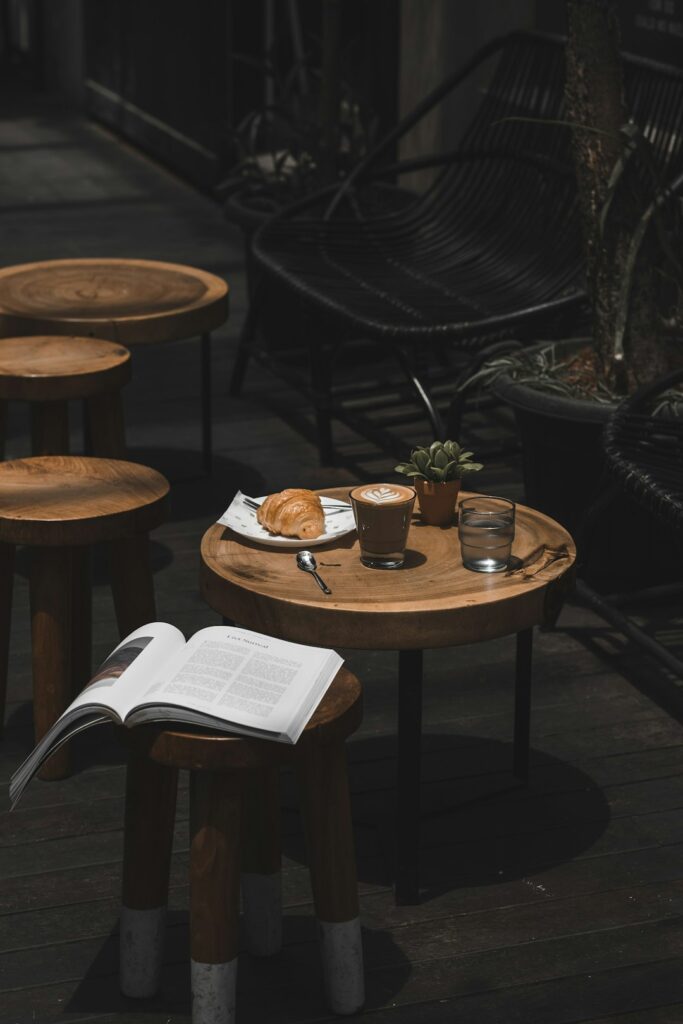

Zoning the space is just as important. Separate the ordering area from seating zones to prevent noise and bustle from disturbing those enjoying their drinks. A quiet corner with power outlets and comfortable chairs attracts freelancers or students who want to work without distraction. Many shops overlook this but adding a small nook with dimmer lighting and sound-absorbing panels can turn occasional visitors into regulars.
Lighting influences mood and usability. Natural sunlight brightens tables and makes the environment feel alive. Large windows or skylights are ideal, but if that’s not an option, use warm-toned bulbs rather than harsh fluorescents. One café I worked with installed adjustable LED fixtures that dim in the evening, creating a cozy feel while keeping menus easy to read at the counter.
Furniture affects both comfort and capacity. Mix communal tables with smaller two-person setups to serve different groups. Avoid bulky chairs that eat up space; instead, choose compact designs that stack or tuck neatly under tables for quick rearrangement. Regularly inspect furniture for wear and wobbling legs, a loose chair can cause accidents and reflects poorly on management.
Functionality behind the scenes is often overlooked by new owners. Staff need clear paths between stations to prepare drinks fast during busy times. Avoid placing refrigerators or storage units in tight corners. Baristas should be able to reach milk frothers, syrups, and trash bins without backtracking. I recommend sketching workflows on paper and walking through them during simulated rush periods to spot bottlenecks.
Training programs tailored for coffee shop owners can be a game-changer. They often cover layout planning alongside marketing and daily operations, which helps you anticipate common mistakes like underutilized space or poor customer flow. Experienced instructors share practical tips from their own shop setups, saving you trial-and-error headaches.
Investing in these courses means access to up-to-date advice long after you open your doors. Real-world experience from veteran operators fills gaps that textbooks don’t cover, like handling rush hour chaos or subtle ways to encourage repeat visits through seating comfort and ambiance.
For a deeper dive into layout strategies, check out layout design of coffee shop. It offers actionable ideas tailored to different shop sizes and visions. Also, connecting with professionals through can provide personalized feedback on your plans and challenges.