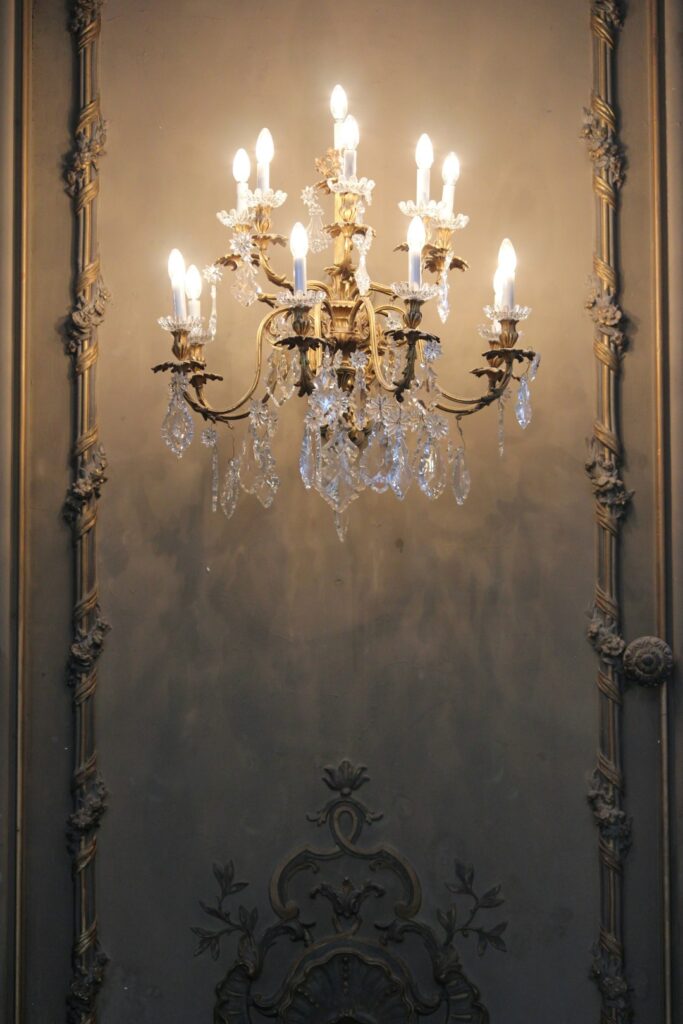

The chandelier’s overall width needs to suit the table as well as the ceiling area. A wide fitting may clear the walls but still crowd diners if the table is narrow. A compact design can look lost above a large surface. Measure the table length and width, record the ceiling height, and note any beams or boxed-in sections overhead. These figures are useful before ordering a murano venetian chandelier, because photographs and showroom proportions rarely reveal how much visual space the glass occupies in a lived-in room.
Check the electrical point before any glass is lifted into place. The existing ceiling rose may not sit over the marked table centre, and moving the light point can involve work above the ceiling rather than a simple adjustment below it. Ask a qualified electrician to assess the supply, mounting arrangement and condition of the junction box. The ceiling structure must also be suitable for the fitting’s weight. Do not assume that a decorative rose, plasterboard fixing or old hook can carry a substantial chandelier without an appropriate support method.
Read the installation instructions before separating the components. Venetian chandeliers often arrive with arms, leaves, cups, glass drops and small fixing parts that look similar but are not interchangeable. Photograph the packed arrangement before removing anything, and place each group in a labelled tray or on a clean cloth. Keep the packing materials nearby in case a part needs to be returned or protected while the electrician works. A quick inventory prevents the familiar late discovery that one cup, pin or retaining washer is still inside a box.
Protect the glass and the room during assembly. Clear the table, cover the floor, and provide a stable platform that allows the fitter to work without stretching from the top step of a ladder. Clean cotton gloves can reduce fingerprints on clear glass, while a soft cloth prevents contact with a hard work surface. Do not rest a chandelier arm against a wall or stack drops together in a sink. Small chips can occur at edges and connection points, so each piece should be handled separately and supported close to its fitting point.
The final height should be judged from seated and standing positions, not from the floor alone. A chandelier above a dining table must provide useful light without blocking faces or making the room feel compressed. Leave enough clearance for people to sit down, serve food and stand beside the table. Check sightlines from the room entrance as well as from each chair. If the fitting has adjustable chain or rod sections, make the change before the glass is attached. Adjusting the drop after assembly can mean taking delicate parts off again.
Light source and control details deserve the same attention as the hanging position. Confirm the lamp types and maximum ratings stated by the manufacturer, then check that the selected dimmer is compatible with those lamps. Some decorative fittings spread light through the glass rather than directing it onto the tabletop, so existing wall lights or a separate dining circuit may still be useful. Before final tightening, take a photo of the wiring and mounting arrangement for the household records. That image can help an electrician identify the setup during a later repair or redecorating project.
For room measurements, installation questions and background on Italian fittings, refer to murano chandelier fitting advice while preparing the project. Keep the instruction sheet, purchase details and any spare fixing pieces together in a labelled envelope. After installation, inspect the chandelier from the table, doorway and adjacent seating area in both daylight and evening light. A rose that appears centred from one angle may still need a small positional correction, and spotting that before the room is dressed avoids moving furniture or repeating the glass assembly.