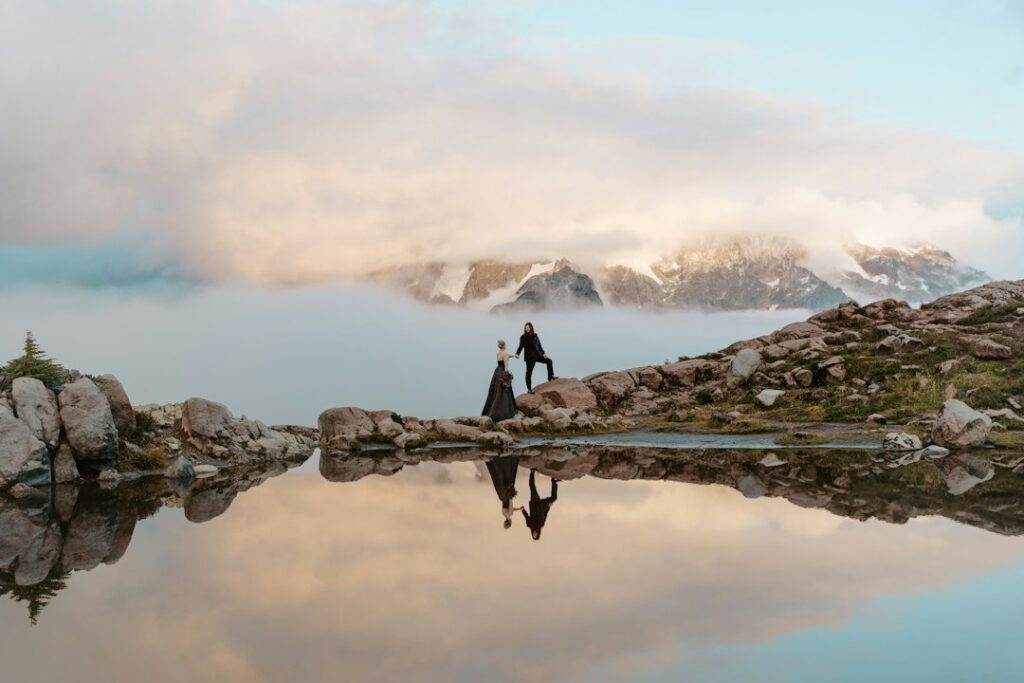

The couple first mapped the day as a sequence of guest experiences. A ceremony beside the lake created a clear beginning, an outdoor terrace offered a place for drinks as the light softened, and the reception space provided a natural evening destination. This process, known as guest flow, shows how people move between areas and where confusion or queues might occur. An exclusive-use venue can make the exercise easier because the spaces are reserved for one celebration. Reading practical garden wedding information can also prompt useful questions before a booking is confirmed.
Next came zoning, which means giving each area a clear purpose. Ceremony seating needs good sightlines and a comfortable approach. Drinks and canapes need room for conversation without obstructing staff carrying trays. Lawn games can sit near the social area, but not directly beside dining tables. The couple also marked a quiet corner for photographs and a discreet place for prams, walking sticks, umbrellas and personal bags. A site plan showing guest routes, service access and accessible alternatives prevents the grounds from becoming crowded, while still allowing the celebration to feel informal.
Their original plan assumed that a clear sky would solve most practical problems. The better plan treated weather as a decision, not merely a forecast. A contingency plan might move the ceremony beneath established trees, bring drinks under cover or open the reception space earlier. Wet ground remains important after rain has stopped because it can affect heels, wheelchairs, delivery trolleys and hired furniture. The couple asked about covered routes, temporary flooring, power, shelter and supplier access, then recorded who would decide on a change and how the florist, celebrant, musicians and photographer would be informed.
The run sheet then became more than a list of ceremony and meal times. It included supplier arrival windows, furniture changes, music checks, family photographs and the point when staff would reset a space. One shared version helped prevent the caterer and photographer from working from different information. Sound needed its own check too. Open lawns, wind and nearby water can affect speech clarity, so microphones and speakers should be tested in the actual ceremony area rather than assumed to work because they were fine indoors. A short sound check protects speeches, readings and quiet moments.
Accommodation changed the rhythm of the proposed celebration. The Woodhouse Wollombi is described as a 100-acre private estate near Wollombi, with accommodation for up to 33 guests. For a couple considering a similar arrangement, the useful questions concern room allocation, arrival instructions, luggage storage and one contact for keys or late arrivals. Relatives travelling together might arrive for lunch, attend the nearby ceremony and return to their rooms after the last dance instead of arranging separate journeys late at night. Staying on site can support shared time, but only if the practical details are agreed early.
Before finalising the booking, the couple walked the property from a guest’s perspective and tested every transition between ceremony, terrace, reception and accommodation. They checked the route after placing chairs, allowed a wet-weather decision point in the timetable and saved the final plan where suppliers could find it. Couples comparing a private estate venue should ask whether the setting supports both connection and access, rather than judging it only by photographs. The better approach did not remove spontaneity; it gave unexpected conversations, changing weather and the whole day dependable foundations.